Example Gallery#
Example 1#
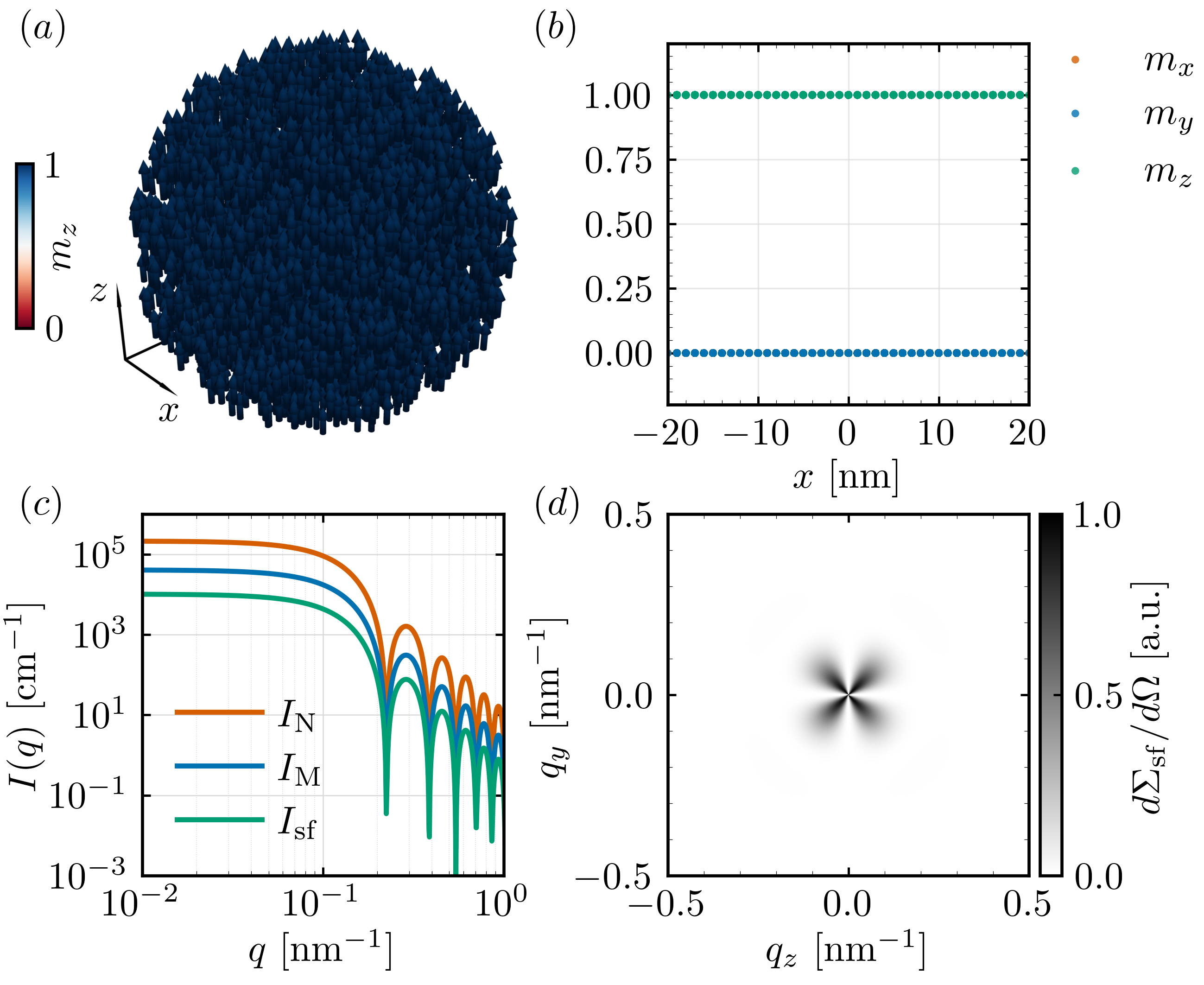
This example provides the 3D structural and magnetic configuration of a homogeneous spherical nanoparticle together with the corresponding NuMagSANS input and output files. It is intended as a simple benchmark and validation case for testing nuclear and magnetic SANS calculations against a well-defined reference geometry.
Example 2#
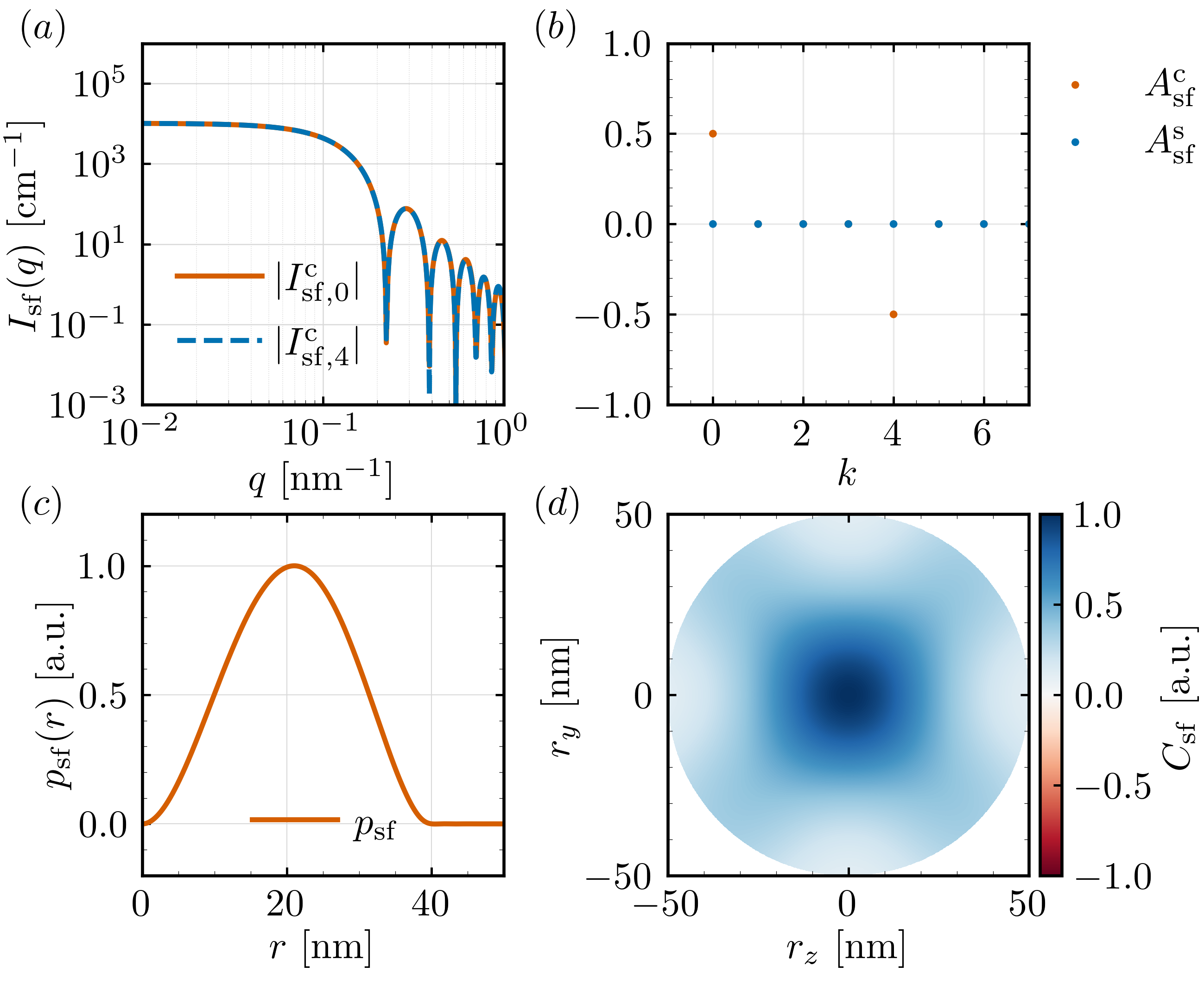
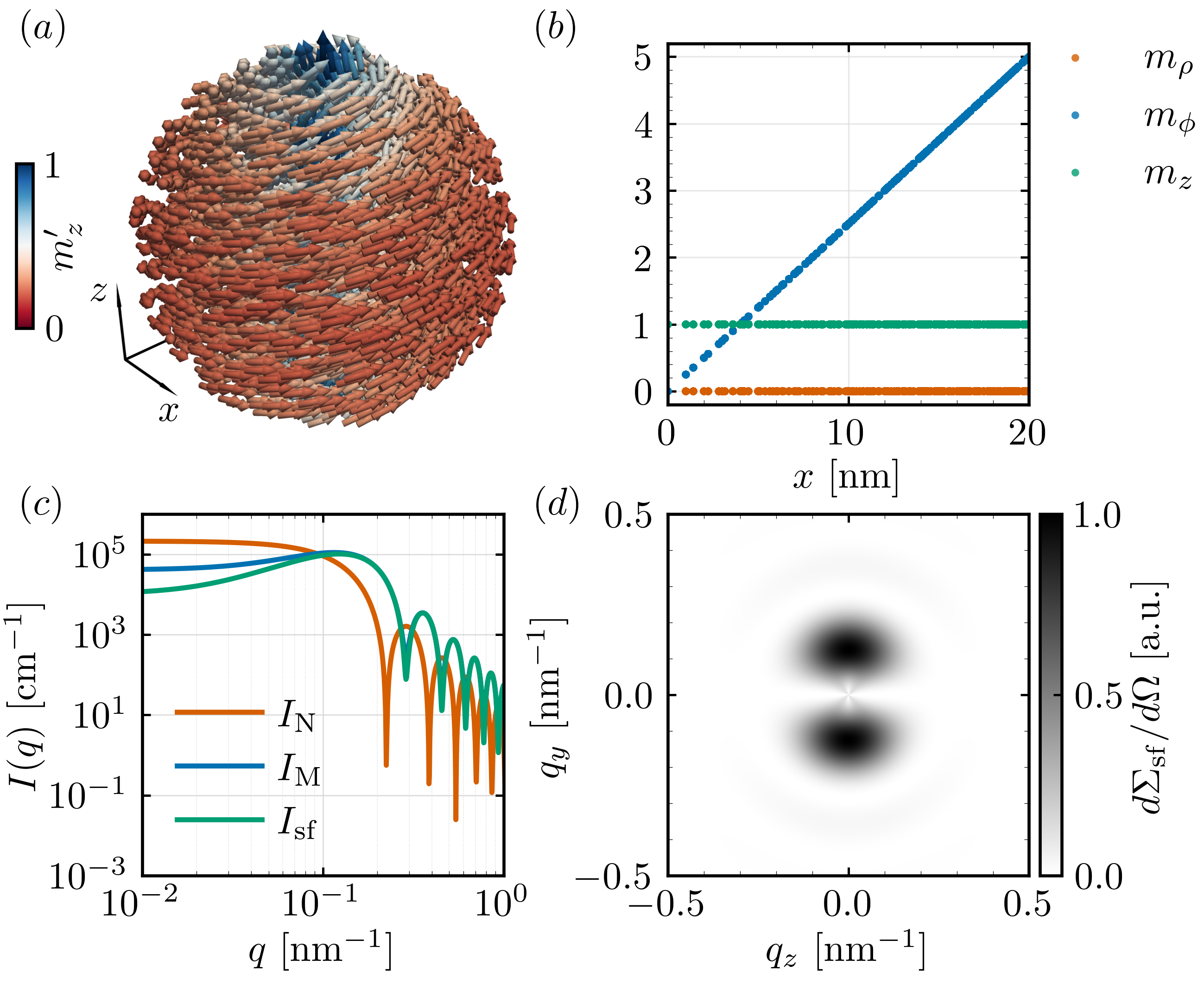
A reference dataset for a spherical nanoparticle with a linearized vortex magnetization state, designed for benchmarking and validation of the NuMagSANS framework. The record includes real-space nuclear and magnetic input data, a data-generation script, a NuMagSANS configuration file, and the corresponding simulated SANS cross sections.
Example 3#
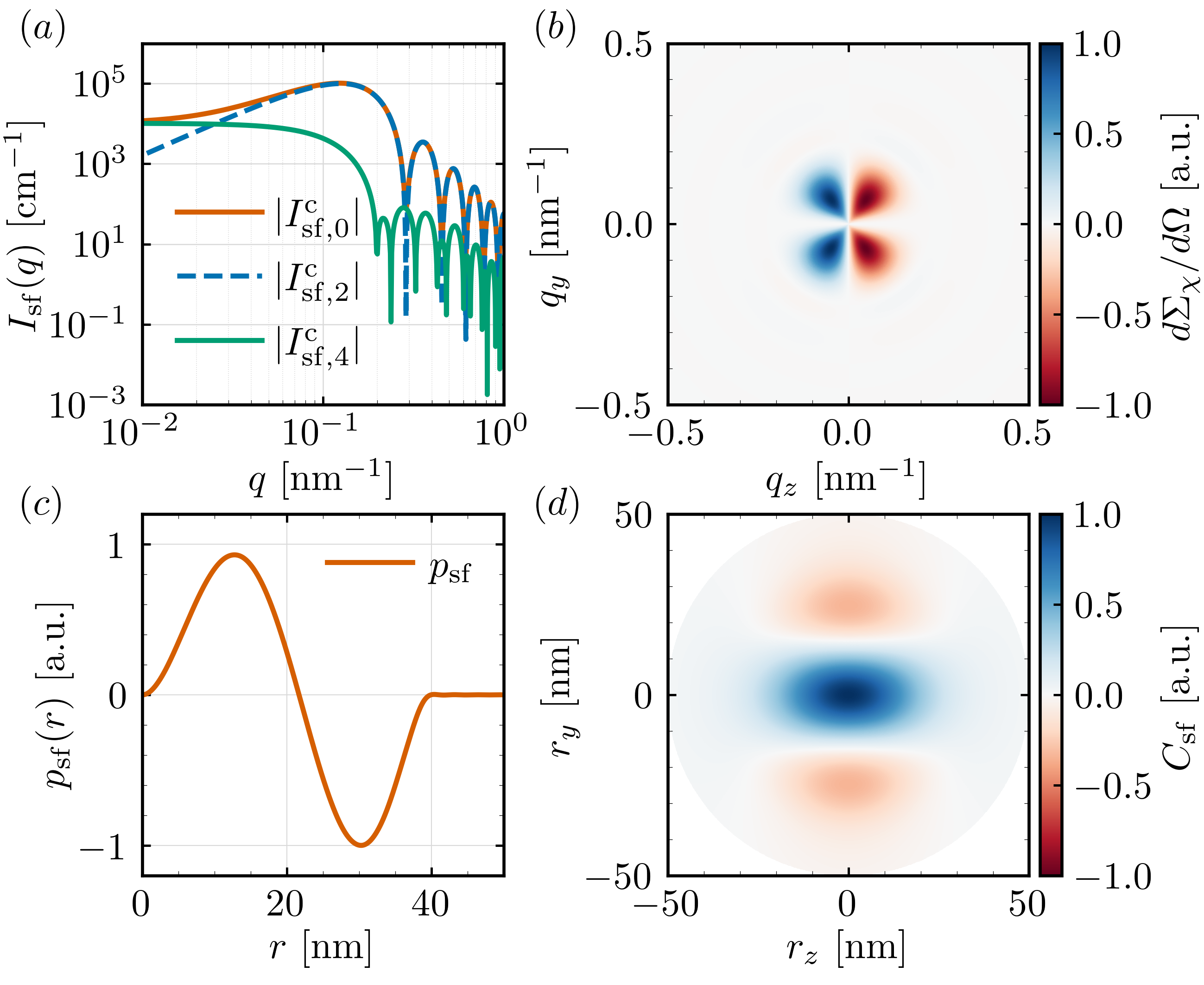
A reference workflow for simulating a dilute ensemble of spherical iron nanoparticles with cubic magnetocrystalline anisotropy using MuMax3 and NuMagSANS. The dataset includes the full simulation and post-processing pipeline, covering random-field hysteresis simulations, back-rotation into a common reference frame, and the corresponding magnetic SANS cross sections for benchmarking and validation.
Example 4#
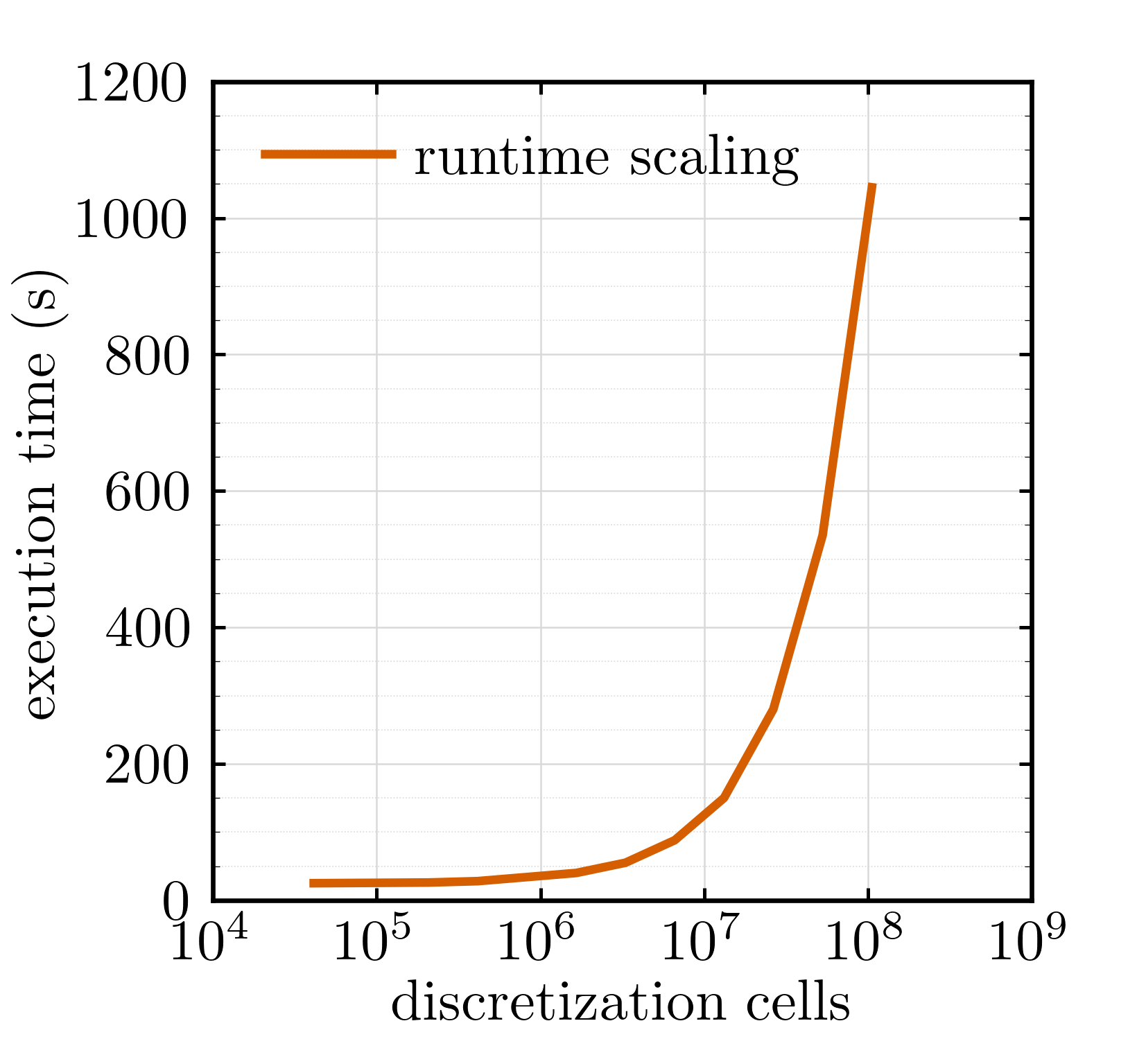
A benchmark dataset for assessing the runtime scaling of the GPU-accelerated NuMagSANS framework as a function of system size. The record includes the input-generation scripts, benchmark workflow, full simulation outputs, and log files required to reproduce and analyze the reported execution times.
Example 5#
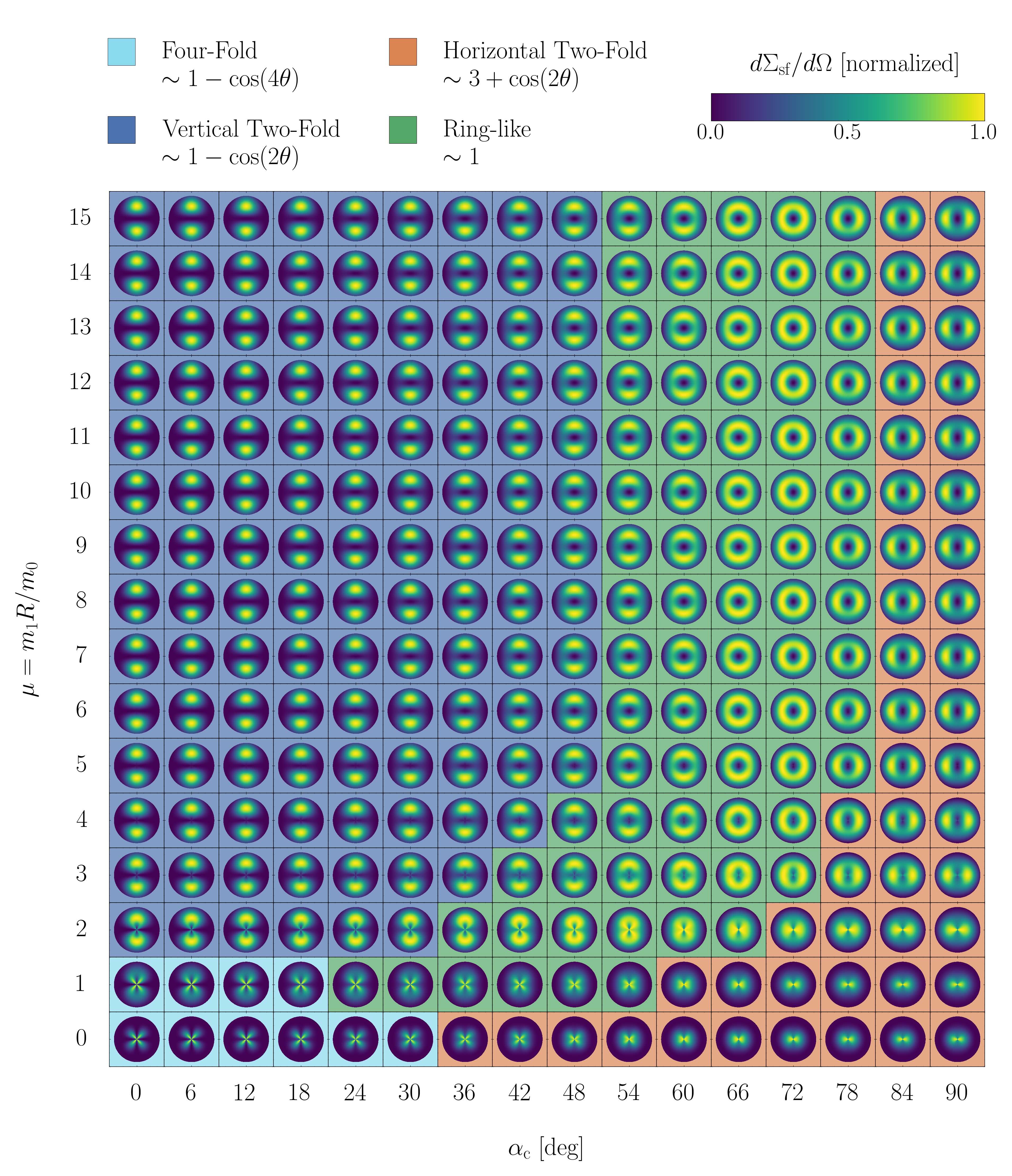
A companion dataset to the corresponding article, providing the simulation and visualization workflow for polarized spin-flip SANS from spherical nanoparticles with vortex-like magnetization states. The record includes scripts for generating real-space magnetic configurations, running NuMagSANS, mapping the resulting 2D scattering patterns across parameter space, and reproducing the associated manuscript figures.
Example 6#
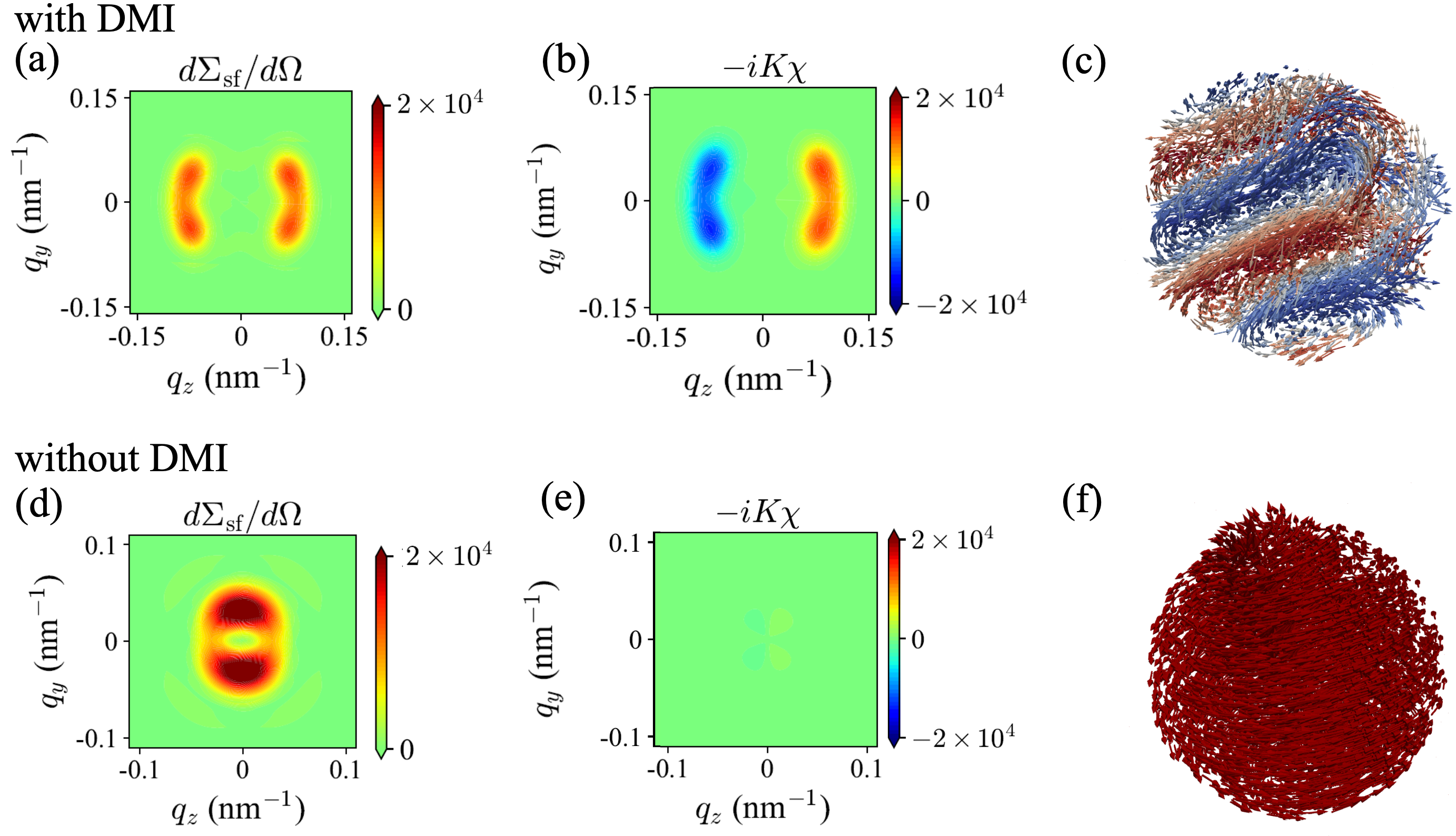
A companion dataset to the corresponding article on the neutron-scattering signature of the Dzyaloshinskii–Moriya interaction in spherical FeGe nanoparticles. The record supports the simulation and analysis of randomly averaged spin-flip SANS cross sections, the chiral function, and pair-distance distribution functions, highlighting that a nonzero chiral signal emerges only when the DMI is included.